







Fast Fashion Destroyed Our Concept of Price and Value
TL;DR
The Quick Version
Since 2000, gas, cars, and homes have all more than doubled in price yet the price of jeans barely moved. Fast fashion giants like Shein and Amazon trained us to expect low prices, and it's wrecked our sense of what clothes should actually cost. I put this to the test by comparing three shirts at $329, $180, and $98 to see what the price difference actually buys you: fabric, construction, and the company behind the label.
The takeaway: buy less, buy secondhand when you can, and know what you're paying for before you decide a price tag is too high.
The Cost of Everything Went Up. Except Your Jeans.
In 2000, you could go to the mall and buy a pair of jeans at Gap for around $45. If you went to buy a car, on average it would cost $21,000 and gas for it would be about $1.50 a gallon. If you bought a home in 2000, on average, it would cost $200,000.
In 2020, gas was about $2.17 a gallon. The average price for a car was around $40,000 and the average cost of a home in the United States was $329,000. Life in general cost almost twice as much, but a pair of jeans at Gap only increased to $50.
In 2026, gas averages $4.06 a gallon. (source) The average price for a car is around $49,200 (source) and the average cost of a home in the United States is $502,700 (source). The average price of a pair of jeans at Gap is now up to $80, but it's still not trending at the same rate as the rest of the costs of living in this country.
This isn't an article about Gap jeans, but how the cost of living has increased exponentially over the past 25 years, yet we consumers are still expecting retail prices to remain the same. And the reason we expect that is because of fast fashion. Whether or not you are shopping Shein, mega retailers like it have warped our concept of price and value and it has affected the quality and price across all apparel brands.
How Companies Keep Prices Down
The price of an item drops (or stays the same as the cost of living increases) when there is a way to make it cheaper. And there are a lot of ways to make things cheaper:
- Cheaper materials (wood laminate versus hardwood plank floors)
- Buying in bulk (McDonald's fries versus fries made by your local independent cafe)
- Cheaper manufacturing (overseas factories where cost of living is lower and regulations are not as strict versus made in the U.S.)
- Technology innovation (replacing paid laborers with machines and AI)
The reason jeans (and sweaters, and dresses, and all of apparel) are still on average the same price two decades years later is a mix of these four methods, but primarily numbers one and three.
With Amazon, Shein, Temu, and these other mammoth companies with questionable practices and ridiculously low prices, how can other retailers compete? How can they make their clothes match inflation in this decade and still keep customers? They can't because customers can't fathom a pair of jeans costing $100 when they can find them elsewhere for $25.
We have lost all concept on value and cost because of these fast fashion megacompanies. We accept that houses, cars, and gas cost almost three times as much but not that a t-shirt, pair of jeans, or a retailer we have worn for decades would double the price of their apparel. And because we're not being realistic with the cost to make clothing with halfway decent materials, manufacturing, and practices, we're destroying our style and the future of fashion.
A $329 Shirt Started a Debate in the Wardrobe Oxygen Community
This article has been updated for 2026 thanks to a discussion in the Wardrobe Oxygen community about an eyelet button-front top from M.M.LaFleur. While currently on sale because it is the end of the season, at the time of the discussion the shirt retailed for $329. The online description states this top is 44% cotton and 56% polyester, has bra strap holders, and includes a matching cami. The question was why a shirt that isn't even 100% cotton selling for such a high price.
Comparing Three Eyelet Tops: $329, $180, and $98
Eyelet tops are a big 2026 fashion trend, and found everywhere from random-name brands on Amazon to high-end fashion labels. And because of that, you can truly find an eyelet top for anything from $5 to $500. The Winnie Aperitivo Eyelet Top from M.M.LaFleur is on the higher-end pricewise, even for a fashion label that isn't known for being budget-friendly.
I wanted to try some well-known mall brands with a similar size range to M.M.LaFleur and see how their version of a button-front short-sleeved eyelet top would compare. I also wanted to see what differences there were between a $329 shirt and one that retailed for a third of the price.
I chose not to go with a fast-fashion brand like Amazon because I do not abide by the business practices that go into such prices and do not wish to pad the pockets of Jeff Bezos even further. I chose Banana Republic and Ann Taylor, two labels I have been shopping for decades and I know are popular with those of you who read Wardrobe Oxygen. First, let's delve into the M.M.LaFleur eyelet top.
M.M.LaFleur Eyelet Top: $329
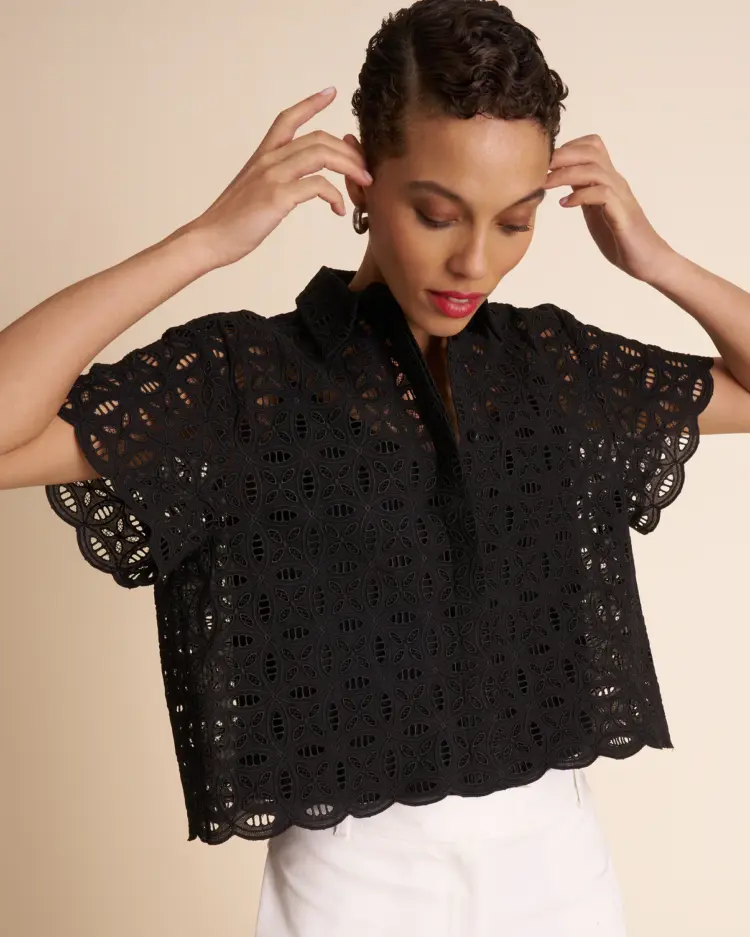
The Winnie Aperitivo Eyelet Top from M.M.LaFleur retailed for $329 and came in two colors; I ordered it in black. Pulling out the shirt, I could feel the weight of the embroidery and noticed the scalloped sleeves that didn't cut the pattern of the eyelet. Investigating the shirt and the product labels I learned:
- The shirt itself is 100% cotton; the thread embroidery is 70% cotton, 30% polyester
- The camisole that comes with it is 100% cotton. It’s a refined cotton, very smooth and silky and lightweight, almost the weight of voile.
- The camisole has adjustable straps and the shirt has those little threads with snaps to hold the camisole and your bra straps in place. This also means the camisole is removable.

The shirt has a covered placket, which is additional fabric to hide the buttons. The yoke (upper back) of the shirt and the collar was lined in the same lightweight black cotton as the camisole. The buttons were solid and thick, a pearlized black that blended with the top. There was a box pleat below the yoke which gave a swing to the back of the shirt, balancing the front which had swing due to the shape to accommodate a bust.

However, the most impressive detail of this eyelet shirt is that the design (which is a circle pattern eyelet) matched up at the seams. Anyone who sews knows how difficult this is, and how this requires one to cut each piece individually and end up using more fabric. Side seams, where the back matched the yoke, where the sleeves connected… the eyelet pattern was almost perfectly consistent.
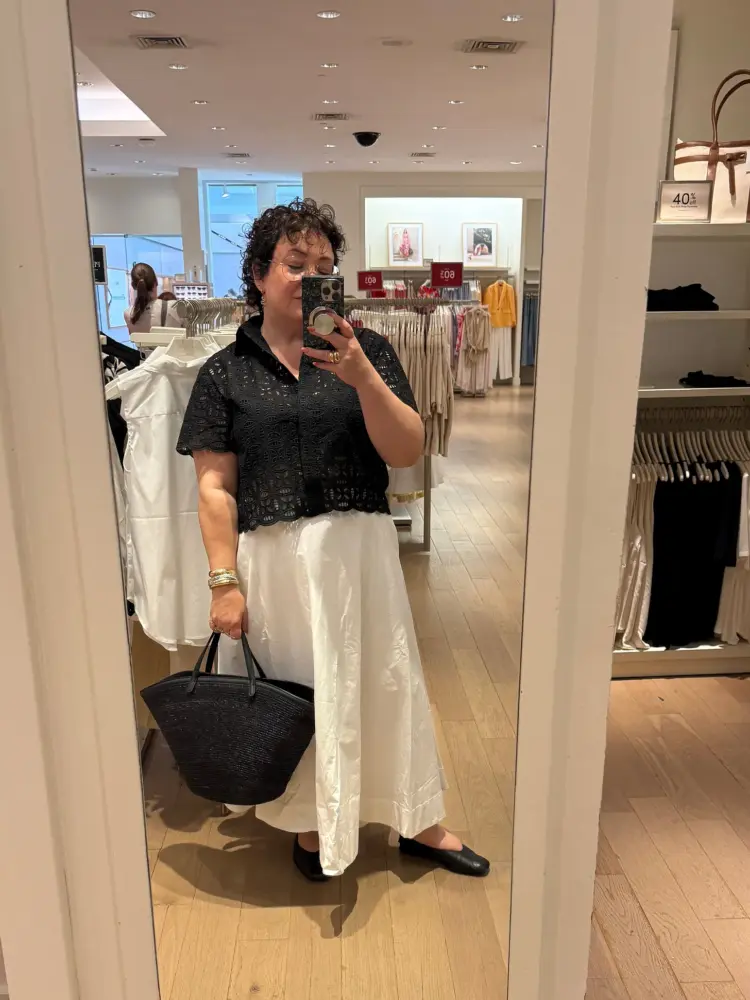
I have worn this shirt several different times over the summer, with and without the camisole. I have paired it with white linen pants, black trousers, a white poplin skirt, and wore it like a jacket over a black tank dress.
Banana Republic Eyelet Top: $180
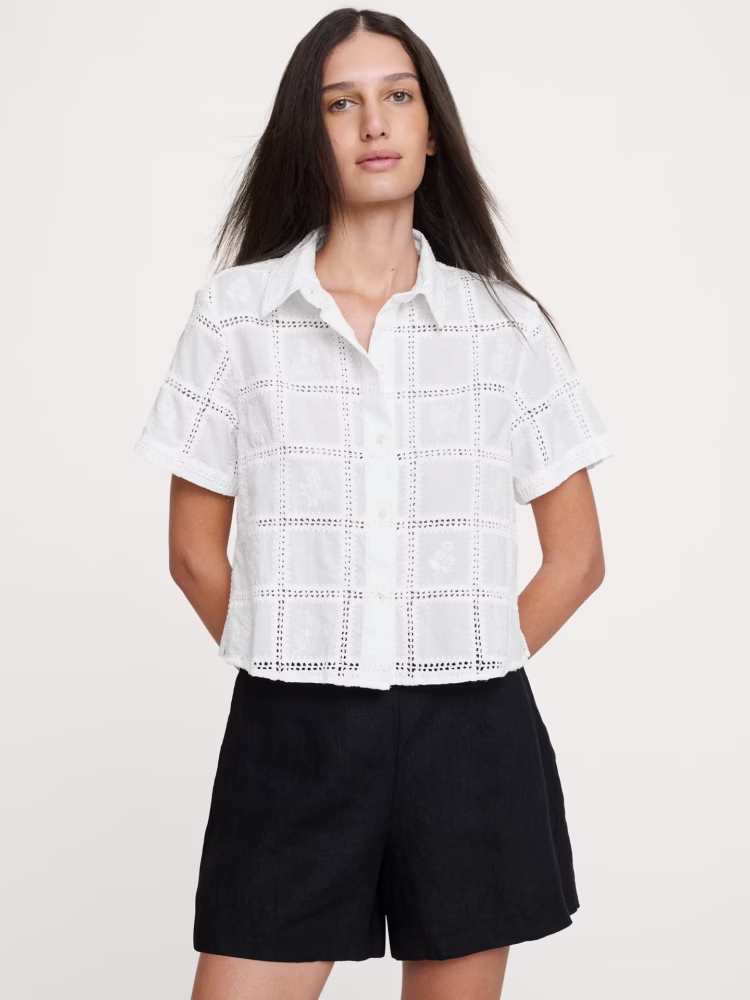
Looking for a 100% cotton eyelet top that I also found to be stylish and a similar level of formality as the M.M.LaFleur shirt, I went with the Banana Republic Boxy Crop Shirt in Embroidered Cotton. Not exactly eyelet, but still an open-worn design with embroidery, this shirt is only available in white. Made from 100% cotton lawn, it is also a short-sleeve button-front shirt with a traditional point collar and originally retailed for $180.

This shirt is a silky lightweight semi-sheer cotton and the embroidery is 100% polyester. The design is the appearance of squares of cotton sewn together, and the occasional square embroidered with a flower or sprig of greenery. The collar, button placket, and yoke are lined in the same fabric. There are two pleats in back, spaced out more than a typical box pleat but offer shape and drape. There is no camisole.

I feel comfortable wearing this shirt with a skin-colored t-shirt bra with no adornment, but others, especially if wearing to the workplace, may prefer a camisole. The embroidered semi-eyelet fabric was treated as regular fabric and there was no focus on matching up the pattern, cutting at a specific place on the design, or having it line up at the hems or cuffs.

This is a very straight and boxy style with looser sleeves and body. I felt the style was more gender-neutral, and would work untucked or tucked in and slightly bloused out. It's a nice top, but far less attention to detail than the M.M. top, no camisole, and I think is appropriately $150 less.
Ann Taylor Eyelet Top: $98
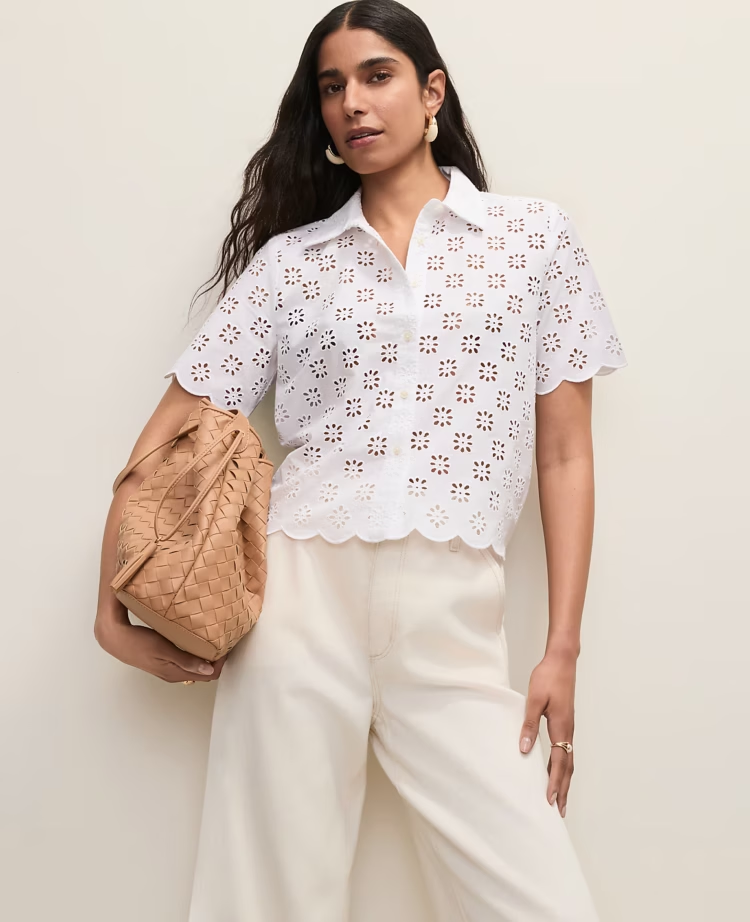
The Ann Taylor eyelet blouse is a closer match to the design of the M.M.LaFleur top in that it is a true eyelet and has scalloped cuffs and hem. Made from 100% cotton with 100% cotton embroidery thread, it is also a short-sleeved button-front style with point collar.

This shirt reminds me of the same eyelet I had dresses from as a child. Same crisp cotton with the cut-out flowers. While the hem and cuffs were scalloped, they weren't done considering the pattern, just the appropriate length of fabric.

No yoke in back, no box pleat, just one straight piece of fabric from collar to hem. The collar was lined in the same fabric, the placket lined with a thin white solid cotton. The pearlized buttons were an off-white color.

Beyond the scalloped hems, this was a very basic shirt. It would need a camisole, not just for the open work but the sheerness of the cotton. The original price of the shirt was $98 and it does feel like a shirt that costs $80 less than the Banana Republic shirt and a quarter of the M.M.LaFleur shirt.
Not All Cotton is Created Equal
With so many synthetic fabrics on the market, it is understandable to desire natural fibers like 100% cotton. But it is important that not all cotton is created equal; some cotton can be such a poor fabric you may be better with a blend.
As with wool and other yarns, the longer the fibers the more durable, but also the finer the yarn can be. This is known as long-staple fibers, or long-staple yarn.
- Long-staple fibers can be twisted tighter for a tighter weave, which actually makes a garment more breathable. Short fibers trap air and moisture, so you feel hotter, and your clothes take longer to dry.
- Longer fibers make for a smoother yarn, which makes the fabric softer, less likely to crease and wrinkle, and have a softer finish and subtle sheen.
- Shorter fibers are more likely to twist out of yarn creating a rough texture, pilling, and better chance of the fabric getting holes with use.
Some terms you may encounter when shopping for cotton apparel:
| Term | What it Means |
|---|---|
| Combed Cotton | Fibers are machine-combed to remove short bits and debris, resulting in a softer finish. |
| ELS | Stands for Extra Long Staple, referring to unusually long cotton fibers. |
| Pima | A cotton variety (Gossypium barbadense) up to 50% stronger than standard cotton, grown mainly in the U.S., Australia, and Peru. Known for softening with every wash. |
| Egyptian | Essentially the same plant variety as Pima, grown in the Nile River Valley. Look for 100% Egyptian cotton, since lower-grade fibers sometimes get blended in. |
| Supima | The trademarked name for “Superior Pima” cotton, grown exclusively in the U.S. It's Extra Long Staple, with fibers around 1.5 inches long. |
| Sateen | A weave (not a fiber type), typically floating three or four warp yarns over one weft yarn, giving cotton a soft drape and subtle sheen without needing synthetics. |
A good way to know if a cotton is good quality is give it a squeeze. If the fabric feels rough and instantly wrinkles, it's short-fiber cotton. Rub it against itself; if it fuzzes up or pills, that is also a sign of lower-quality or shorter fiber cotton.
None of the three shirts above share what kind of cotton they are from, nor the length of the fibers. However, when doing the squeeze test, the Ann Taylor shirt failed by instantly creasing.
What's Behind the Price Tag: The Companies
| Brand | Founded | Owned By | Size |
|---|---|---|---|
| M.M.LaFleur | 2013 | independent | ~82 employees |
| Banana Republic | 1978 | Gap, Inc. | large public company (Gap, Old Navy, Athleta, Banana Republic, etc. under one roof) |
| Ann Taylor | 1954 | Sycamore Partners (Knitwell Group) | Multi-brand conglomerate owned by private equity (LOFT, Soma, Talbots, Chico's, Lane Bryant, Ann Taylor, etc.) |
a quick look at the companies behind these three shirts
A company's size, business practices, and location can drastically determine the price of a garment. Let's dig into the businesses behind these three cotton shirts:
M.M.LaFleur
M.M.LaFleur launched in 2013, founded by Sarah LaFleur, Miyako Nakamura, and Narie Foster. It's stayed independently owned, has around 82 employees, and gives 10% of its yearly profits to organizations that support women. The company also runs Second Act, a resale program for pre-owned M.M.LaFleur pieces, plus a partnership with ThreadUp, and has built a sustainability roadmap tied to the UN's Sustainable Development Goals.
In 2024, when the company's lender ran into financial trouble, founder Sarah LaFleur didn't go the bankruptcy or private equity route. She reached out to 50 women and asked them to invest directly. About half said yes, becoming angel investors and keeping the company independent. That's part of why the brick and mortar stores matter to them: LaFleur has said in interviews that customers need to touch and try on the clothes before the price point clicks for them.
Banana Republic
Banana Republic started in 1978 as a safari-themed travel outfitter and mail-order catalog, founded by Mel and Patricia Ziegler. Gap Inc. bought it in 1983, and by 1988 the Zieglers had lost creative control entirely. What started as a quirky travel brand became a mall-friendly label managed under Gap's playbook, same factories, same supply chain, same corporate practices.
That size cuts both ways. Being part of Gap Inc., alongside brands like Old Navy, Athleta, and (at various points) Intermix and Piperlime, means Banana Republic gets the bulk-buying discounts smaller labels can't touch. It also means it's tied to Gap Inc.'s labor record, including its refusal to sign the Joint Memorandum on Fire and Building Safety after the 2013 Rana Plaza factory collapse and forced labor allegations reported in 2020.
Ann Taylor
Ann Taylor opened its first store in 1954 in New Haven, Connecticut, founded by Richard Liebeskind. The name wasn't a real person; it was the bestselling dress at his father's store. Over the following decades, the brand changed hands repeatedly: sold to Garfinckel's in 1977, absorbed into Allied Stores, hit by a hostile takeover from Campeau Corporation, and eventually bought back by a group of investors that included its own employees.
In 2015, Ascena Retail Group, which already owned Lane Bryant and Dressbarn, bought Ann Taylor and LOFT. Ascena filed for bankruptcy in 2020, and private equity firm Sycamore Partners picked up the pieces. Today Ann Taylor sits inside Sycamore's Knitwell Group alongside LOFT, Talbots, Chico's, WHBM, Haven Well Within, Lane Bryant, and Soma. That's a lot of women's apparel brands under one roof, which is exactly how a company keeps costs down: shared manufacturing, shared shipping, shared everything.
How Can We Afford the Fashion We Deserve?
So a decent cotton shirt in 2026 can cost anywhere from $98 to $329. Even the low end is serious money. For $98, you can feed a family, fill the gas tank, pay a utility bill, or buy a prescription. What matters here is need versus personal value.
Let's be honest: no one needs a $329 eyelet blouse, even if it matches up the pattern and comes with a camisole. It's beautiful, it's well-made, and I find it versatile. But honestly… this is a want purchase, not a need. But want holds merit, too.
I See It, I Like It, I Want It, I Got It
When it comes to wants, we've become a society that sees it, likes it, wants it, gets it. We feel pressure to wear something new to every occasion instead of repeating favorites and building a personal style. We get frustrated with the lack of selection, size, and fit, so we buy mediocrity and end up with a closet stuffed full of nothing to wear.
We scroll through social media and stream shows where temptation shows up every 30 seconds, phone in hand, ready to buy the look in minutes. Influencers tell us dupes are just as good, “looks for less” are smart shopping, and life gets better with one more purchase.
Is Your Closet Growing, Too?
In 2000, I worked for a company that sold jeans, and a few times a year I got 55% off. Even then, I only owned a handful of pairs. Each one served a different purpose: some for going out, some for weekends, some that worked with heels, some with flats. All of them got worn. All of them were purchased on purpose.
Years later, during a closet cleanout, I counted more than a dozen pairs of jeans and realized I only liked two of them. Most didn't fit well, but I kept them because I didn't have anything to replace them with. Some were duplicates bought out of fear my one good pair would blow out and leave me with nothing. Most were mediocrity, bought and kept because I told myself it was the best I could do.
These days I'm back to a handful of jeans, each with its own job. I don't care how good the price is: if they don't do right by my butt, they're not staying in my closet. If they slide down by noon, they're gone. Returns suck and stores rarely have my size, but that's not an excuse to own crap.
All that crap is what's keeping me from the money for quality. And for tailoring. And for the energy to launder and care for what I own so it actually lasts.
When Has Fashion Been Easy?
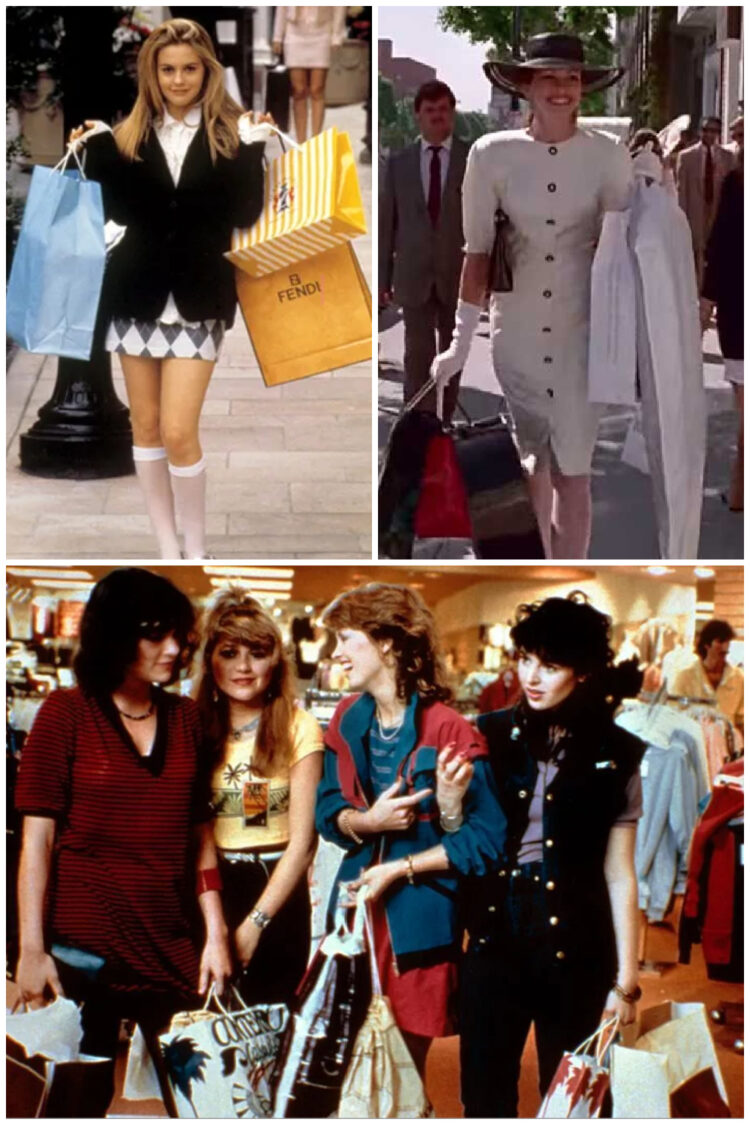
When has fashion ever been easy? We hold onto this Pretty Woman, Clueless, Valley Girl fantasy of spending a day at the mall and walking out with the perfect closet. I don't think any of us lived that fantasy, not once, in our grown-ass woman lives.
When I was an adorable 20-something, I'd go to the mall and come home empty-handed more often than not. Okay, I'd come home with an empty Nordstrom Ice Storm cup and a random pair of earrings, but no life-changing outfit. Jeans didn't fit my butt, shirts didn't fit my bust, blouses didn't fit my arms, necklaces didn't fit my neck, and sunglasses never fit my head. Back then, I left all of it at the mall.
You don't need half of what's in your closet, and you probably don't need more. You're rarely buying out of need. You're buying out of desperation and FOMO. Wardrobe Oxygen is part of that problem too, showing you a great pair of earrings or linking my outfit on ShopMy for easy shopping. But buying crap and complaining that clothing costs too much just wrecks our concept of price and value even further and takes us off course from finding actual style.
Does Cheap Quality Fashion Exist?
I love clothes and fashion, and if you're here reading Wardrobe Oxygen, you probably do too. Fashion is art, it's a hobby, it's self-expression, and I'd be miserable wearing the same five things on repeat, especially if I didn't love them in the first place.
I'm not asking you to wear your current closet into the ground, or to rip it off your body and run down the street screaming your newfound freedom. I'm asking you to look at the actual cost of things in 2026 and compare it honestly to what clothing costs now. The math doesn't add up, and every time we chase fast fashion prices, we make the problem worse.
Budget-Friendly Reliable Retailers
Some retailers do cheap fashion better than others. I often recommend Old Navy: its practices aren't perfect, but it offers size inclusivity, natural fibers, occasional sustainable practices, and a way to embrace trends without looking dated or falling apart within a season.
I'm also a fan of the factory stores for J. Crew, Gap, and Banana Republic, which often have style and fit that rival or beat their full-price counterparts. I still have a Gap Factory dress in my closet older than my teenager.
Secondhand Is So Chic
Current trends are perfect for thrifting, consignment shops, vintage fashion, and buying secondhand online. The return of '90s and Y2K style, runways embracing street style, and endless TikTok and YouTube tutorials on DIY tailoring and upcycling all give you ways to add newness to your closet without spending a fortune.
For brands like M.M.LaFleur, head to Poshmark or M.M's resale site, Second Act. Also check out Gem which lets you save specific searches and will email you as soon as something fitting that description pops up on any of the popular resale sites.
If secondhand shopping sounds time-consuming, remember how it was to shop in 2000. We didn't have stores at our fingertips. We took time, touched fabric, made lists, compared options. Finding the right piece could take weeks or months. Life moves faster now, but your closet doesn't have to keep up. We can't slow down time, but we can slow down our shopping.
You May Also Like:

Fast Fashion FAQs
Why do fast fashion clothes cost so much less than other brands?
Fast fashion companies cut costs everywhere at once: cheaper synthetic fabrics, mass manufacturing overseas, simplified construction with fewer darts and pleats, and enough scale to negotiate rock-bottom prices on materials and shipping. No single shortcut explains the price gap. It's all four working together.
Is 100% cotton always better quality than a cotton blend?
Not automatically. Fiber length matters more than fiber percentage. Short-staple cotton can feel rough, pill quickly, and wrinkle on contact, while a well-made blend can outlast cheap cotton. Look for terms like Pima, Supima, or combed cotton, since those signal longer, more durable fibers.
What's the difference between Pima and Supima cotton?
Pima refers to the cotton variety itself and has no formal certification, so quality can vary by brand. Supima is a trademarked term requiring 100% Pima cotton grown in the U.S., which comes with an actual certification process behind it.
How can you tell if clothing is well made before you buy it?
Check whether patterns match at the seams, whether the collar and plackets are lined, and whether there's a yoke or pleat for shape instead of one flat piece of fabric. Give the fabric a squeeze: if it wrinkles instantly or pills when rubbed, it's lower-quality material.
Is it worth paying more for clothing from a smaller, independent brand?
Often, yes, though not automatically. Smaller brands can't buy materials in the same bulk as retail giants, so their prices reflect real costs like fabric, domestic labor, or more detailed construction. That's not true across the board, so it still pays to check fabric content and construction, not just the price tag or brand name.


Did you like what you just read?
Consider tapping here to buy me a coffee in thanks. The best gift you can give a content creator is the gift of sharing. Consider sharing this article on Facebook, Threads, or saving on Pinterest. Thank you so much for your support!
Want to see more Wardrobe Oxygen in Google?

Maybe years of influencers selling dreams. Oh, the irony.
It’s glib to blame the influencers; this issue began before the onslaught of Instagrammers or even bloggers. That’s like blaming malls for their own downfall, and not the change in customer trends, the change in retailers taking funds from payroll to online, the change in real estate costs. As an influencer who actually knows how the business works, I feel confident in blaming who deserves blame – the multimillionaires and billionaires who are so incredibly disconnected from not only their customers but society they believe we won’t notice adding 30% more polyester, or replacing vanilla bean with vanilla flavor, or making each bar of soap 1/4″ smaller but keeping the same price. And then using what to them is pennies but to the gig economy a car payment or a prescription refill bonuses to shill these cheaper and cheaper items. Gifting them the items so they become reliant on them, rewarding them for each sell, knowing they need it so much they will sell it so well no one will notice (or blame themselves) that it falls apart in one wash, pills like crazy, was created by child slave labor, has weirdly high levels of lead in it.
And to lump all influencers together, when many of us, like store managers and boutique owners across this country, are trying to balance their ethics with their paychecks, trying to find the wheat among the chaff. I do mention that I am part of the problem in this article, but to say it is influencers who are to blame is unfair and inaccurate.
Well said.
Thanks for this piece-to-piece comparison! The part about MMLF avoiding private equity was really interesting. I agree that an in-person trip to the store was critical-once I tried on pieces that really fit me, I was hooked. MMLF pieces are workhorses in my wardrobe. Wash and drape incredibly well. Second Act is great to get gently used items at lower prices.
Thank you, thank you, thank you! Thank you for recognizing that patterns *should be* matched at the seams whenever possible. As someone who used to make almost all my clothing, that was drummed into me from a young age, and it makes me crazy to see items where that is completely disregarded, especially on a plaid garment. Thank you also for recognizing that just because an item is made of cotton (or wool or whatever fiber) it does not mean that it is a quality product. One must consider what kind of cotton (or whatever) an item is made of and also what finishes have been applied to the fabric.
I enjoy your articles a lot.
Fabulous article, Thank you
Alison!!! This post is wonderful, and the first part in particular hits close to home. I run a used bookstore in a top 20 US metropolitan city (ugh, I sound like a bot) and the number of people who expect books to be 25 or 50 cents is mind boggling. I don’t get special used bookstore rent, minimum wage, electric bills etc- my shop lives under the same price fluctuations we all do. The inflation calculator (https://www.bls.gov/data/inflation_calculator.htm) was an eye-opener for me.
This post has such a great message – thank you for your research and detail!
Let me add to you’re very interesting and insightful article the reality of being plus size ina world where glp medications are seemingly making it seem no one needs well made a stylish clothing in a size 24w! My Nordstrom store, which used to have an amazing plus size department that encompasses a variety of labels and price points. A place you could build a wardrobe in person, is now down to a measly rack or two of sub- quality items. The entire industry is really out of touch with consumers no matter how much you have to spend. The crepe Eileen fisher pants I own in many variations are suddenly priced at $200 (from I believe $139 when I started buying them.. $150?) and the quality is less than they used to be. Even Eileen!
What you said:
“You don’t need half of what’s in your closet, and you probably don’t need more. You’re rarely buying out of need. You’re buying out of desperation and FOMO.”
I will print out and tape to my pc! Over the years, my mom and my sister helped me go through my wardrobe and make piles to discard and to launder and pass on to others who might need them . . . Why is my closet bulging now? Time to do another rake out and giveaway. It is painful to admit I have not lost the weight I might need to fit a size smaller in investment pieces . . .
This is an absolutely fascinating article. Thank you!
I really appreciated this article and am going to reread it again later to think about it–and my own shopping–more. It reinforces the directions I have been taking recently. Thank you for the comparisons and specifics–very interesting! One small note: I think the full price $$ difference between the MM LaFleur blouse and the Banana Republic blouse is $149, not $50.
Thank you! I saw I forgot a 1, and caught a couple of other typos within the piece. Hey, proof I didn’t have AI write this, LOL! I appreciate you!
*Like*
This was such a great article, Thank you for that!
I have been saying it for years. So sad to see full closets of polyester clothing.
I missed this one first time around, but it’s a great read! Especially love the detailed comparison of all the elements of a particular garment — will help me be a more discerning shopper. the things that annoy me most are when stripes/patterns don’t match at seams, and set-in shoulder seams are poorly stitched and wonky.
any chance you’ll do a similar deep dive on Frank & Eileen pieces? I’ve
ordered a couple of Eileen shirts, one from Nordstrom and one from the F&E website and returned both as “not worth it”…….but I am drawn to their styles.
I have never tried Frank & Eileen before! I may need to do this. I was thinking I needed to do one about linen, this summer I had linen shirts from Quince, Tommy Bahama, Talbots, Universal Standard, Chico’s, Lands’ End, and J. Crew and the differences were really interesting. It made me a big Tommy Bahama fan; heavier weight but actually far cooler than the rest, wrinkled less, kept its color and shape over multiple washings, amazing attention to detail.
I have a Frank & EIleen cardigan style sweater shirt. The front and the sleeves are cut out of one piece of material. Likewise the back and back sleeve are one solid piece. It was several hundred dollars. It wasn’t until I got the item and looked at how it was cut/constructed that I could figure out why it was so expensive.
Excellent article. I think back to the high quality of Talbots in the late ‘80s and early ‘90s. I invested in 100% wool flannel trousers fully lined at a price of $118. Most synthetic pants at Talbots in 2025 cost less. It is nearly impossible to find similar quality for even twice the price even in DC. LL Bean and Lands End used to be a place with high quality 100% Shetland wool sweaters. In 2002 Chico’s sold gorgeous embroidered denim jackets and artisan blazers, an amazing 100% linen machine washable pants. I willing to pay more, but I’ve found Etsy is the way to go.
It’s near impossible to find the quality we expected and found so easily back in the ’80s and ’90s. Etsy, the RealReal, Poshmark, eBay, Mercari, vintage and consignment stores are the way to go and funny enough, Talbots is easy to find as folks don’t realize the old stuff was goooood.
Exactly! My favorite outfit in fall and winter is jeans, a crewneck sweater and a great wool blazer. Talbot’s blazers have always been my go-to, but their current quality and prices just don’t cut it for me. I’ve found several gorgeous Talbot’s wool blazers on ebay in the $30 range. The quality is first-rate and they fit me like a glove. Btw, I’ve also scored Mother, Frame and Paige jeans on ebay. It’s a great way to shop!
So much this. I hardly ever buy in stores. So much feels flimsy and not meant to last. I don’t want clothes made of plastic. I recently bought a vintage 80s long wool coat off Poshmark and the quality and heftiness is incredible to anything I attempted to buy new. Fast fashion is a disease. If you can’t see yourself wearing something 50+ times should you be buying it? That’s the attitude I have had in the past couple years. It’s not perfect, but I refuse to buy stuff that doesn’t feel good to touch and isn’t supporting my values. More and more I am concluding that every dollar I spend is making a statement about my values and SheIn is not it.
Thank you Alison for this very insightful column. Might I add something that I have thought about a lot. I was raised in a family that was very strapped economically, as well as emotionally chaotic and it took me years to realize that my attitude towards any kind of shopping was a response to what I have heard described as “poor brain”. In other words, the temporary satisfaction of coming home from the mall with “something” can make you feel better for a while, less left out from the riches of your society. Now that I am older and more prosperous, I still sometimes grab a sale item just in the hopes that it will fit and look OK. I live in the downtown core of my city where there are 3 very good clothing stores and I walk by them daily. It’s very difficult to not be lured by their occasional sales. What we have done, now that we are retired, is set a monthly budget for all purchases and so I really need to think hard about clothing purchases. It’s a difficult discipline and the temptation to buy to get that “feel good” effect will never leave. I think that if impulse buyers, like I once was, step back and reflect a bit on what propels the purchases, then it might be a little easier to not fall for the impulse. Like you, I enjoy looking put together, but want my shopping to be thoughtful, slow, and truly productive. So thank you for once again reminding us of how important it is to be a thoughtful and intentional consumer. But I must admit that as a Canadian, I am struggling right now with buying from any US company like Talbot’s which has been my main source of clothing for the past 15 years. One of the stores near me carries some wonderful Canadian brands but with blouses at $500 and suits at $1500 that’s just too far a stretch for me.
Thank you for this timely and insightful post. I recently went through a closet purge. I found that the clothes I love and decided to keep are the ones that I spent “too much” money on. They have made every cut from previous purges and I still wear them. As I looked at them I realized that I’m not keeping them because they were relatively expensive, but because they are well-made, enduring styles, and fit me well. Cost per wear over the years is literally pennies. And they’re not boring. I have mostly basics but also some signature pieces that I have had for years that I regularly mix with the basics. At age 74 I think I can still look modern and uniquely me by shopping my own closet. I haven’t given up shopping altogether and will occasionally add a trend to my wardrobe. I often find that the “trends” are already in my closet (leopard, flared/wide pants, leather, burgundy, even fringe LOL)
The clothes I let go were good quality and were welcomed at a women’s shelter. Much better than tossing no longer wearable fast fashion into the trash.
I grew up in lower middle class family in the Midwest. We took care of our clothes. Seams and hems had enough fabric to adjust the fit when needed. We mended clothes as necessary instead of tossing them out and buying new ones. We polished or buffed our shoes and resoled them (are there any cobblers around anymore?).
More than anything, it is important to me to set an example for my children and grandchildren about sustainability and value for money.
Such a good post, Alison—thank you. Lots for me to think about here. I am guilty of buying more for different reasons—I’m stressed out, I’ve got an event, I’ve gained weight, and I just enjoy clothes and shoes, etc. Also, I think there’s a part of the adult-me who remembers the teen-me who couldn’t buy a lot of trendy clothing because of financial reasons & so now that I can afford more, I want more. Following blogs and influencers on Instagram does not always help either (this is not shade on WO; I’ve followed you for over 12+ years and still think you’re the best). It’s fun to see new clothes, shoes, bags, etc. and think about where I could wear those things. Still, I need to pause and really think about what is needed and useful as opposed to just what’s wanted. Over the weekend, I did a very tiny bit of closet clean out and was rather shocked at the amount of clothes I took out for the donation pile. My community has a buy-nothing type group, so I have been making good use of it by passing along clothes to others who want them. But, I still have way too much, I know.
Good info. I’m just starting a major overhaul using your “Starting from Scratch” series. I spend time at my two different homes (no, not elite, main house bought 39 years ago, small urban apartment thanks to really frugal grandparents). I never seem to have what I need at either place.
Though they are two very different lifestyles, the basics are needed in both places. Packing and unpacking from my wide assortment of clothes isn’t working, and I don’t like most of them anyway.
My plan is to acquire two sets of the basics. Not buying the exact same thing twice, just the same category. I hope I will then be able to switch the wardrobes back and forth during the year.
Today’s post is reminding me to add a more serious layer to the list of qualities I want in each piece.
I have $2000 to get started. (OK, I’m a little privileged). I’m sort of looking forward to this exercise but I expect it isn’t going to be easy.
Another great article! I have always valued quality over quantity, but I do occasionally fall into that, “I want something new to wear – NOW!” trap and, you know, nine times out of ten, the article ends up in the Goodwill bag within 3-6 months. I am striving to be a more mindful shopper, taking things like materials and where they’re sourced and where the item was manufactured into account. These are things that should be included in the specs for the item you are considering purchasing. If that info isn’t available, or very hard to navigate to, you probably don’t want to hit that add to shopping cart button.
Thank-you, yet again, for a very interesting and revealing article.
To quote: “We have lost all concept on value and cost because of these fast fashion mega-companies.”. Err, no. It is because mega-companies have customers. If no-one bought from them, they wouldn’t survive.
It is the greed and hypocrisy of the fashion consumer (largely female – call me a misogynist, if you will) who fuels the trade.
You are holding up a mirror to the majority consumer. Well done.
I think that *is* misogynist. Where exactly do you think these mostly female consumers get the idea that they need new clothes all the time? Push on your assumptions a little bit and you’ll see the *man* behind the curtain. The money here is still, as always, in mostly male hands.
If I may, I’d like to quote the essay
“So a cotton top in 2024 is $128. That’s a lot of money. For $128 you can feed a family, fill the gas tank, pay a utility bill or buy a prescription. The thing to factor is need and personal value.”
Now I’ll confess. I am the original poster of the now infamous complaint about the $128 blouse.
I wish I could spend $128 on one blouse. I am sad that I can’t.
But I’ll keep wearing what I have and live vicariously through those that are able to afford $128 for one blouse.
I am glad you wrote what you did. You are not alone in not being able to afford a $128 top. Retail is all out of whack and it makes a bigger disparity between the haves and have nots. The middle class is disappearing and forcing us to resort to questionably created apparel.
Thanks for this great post–it’s so true! I used to regularly purge my closet twice a year, but in the past 5-10 years I’ve stopped because once I get rid of something, it will be nearly impossible to replace with the same quality. Most of my clothes are 10+ years old. I have wool and cashmere sweaters from 1980s/1990s that are still in great shape, but have paid $100+ for similar sweaters in the past decade that either pill or get holes within a month.
Close to retirement, working from home and leading a very casual life, I barely need any clothes anyway. I’m not really on socials so I’m not seeing the “influencers.” Combined with the fact that shopping just isn’t fun anymore (either travel to stores with a dearth of selection and sizes, or buy a bunch of clothes online that end up not fitting and schlep them to UPS), it’s become very easy not to buy new stuff. Thrift shopping/resale websites are too much work for me.
All of this has helped me kick the retail therapy habit, which has streamlined my life considerably. That said, I still miss the days when a trip to the mall was exciting and fun!
I’m really glad to see you write on this subject. In addition to unequitable and downright abusive manufacturing practices, fast fashion is one of the biggest polluters in the world today. It is contributing to the destruction of the environment and of local markets and economies–it’s just that it is primarily affecting people in the global south, so we are able to ignore it from our comfortable lives in the U.S.
It’s nearly impossible to avoid fashion brands that have questionable (at best) labor and environmental practices, and it can be so hard to find real, hard facts of each brand’s impact because they work very hard to obscure them. And even those brands that tout their sustainable and fair labor practices can’t wholly control or ensure visibility into their manufacturing partners’ practices. Some very large popular legacy brands also even cheat their manufacturers out of payment for the product they’ve produced. It sucks all around.
As someone who has sewn a lot of my wardrobe, I’ve had to face the fact that even that practice isn’t as sustainable as I’d like due to fabric manufacturing practices and environmental impact, and I have a decided preference for natural fibers. But I also love rayon and bought a lot of it in the past before I understood the impact of its manufacture. It’s almost impossible to find any good information on a specific big-box fabric’s sourcing.
It’s all a little depressing and a lot frustrating. The solution seems clear: buy less, use less, repair more. But it’s very hard to resist the draw of new new new. Especially when so much of it is rock-bottom cheap. I keep reminding myself and anyone within earshot that if an item is so cheap I feel like not buying it would be stupid, then at minimum someone is not getting paid and that someone probably really needs to be paid for their labor. The whole “cheaper COL in X global south country” is a bit of a red herring. Corporations have a vested interest in influencing the politics in those countries to ensure continued cheap manufacturing. It’s the East India Company all over again. And unfortunately the people most adversely affected are women and children.
Sorry for the novel. It’s an incredibly vexing issue and you’ve covered a large portion of its problems in this post, and I’m really glad to see you bringing this topic to your audience.
Thank you for writing what I have been thinking for the past year or so. Your article is well researched and presented.
I appreciate the effort and sentiments expressed.
Great read! I visited from Marsha blog. Nice to meet you and yours!
Welcome, Nancy! Any friend of Marsha is a friend of mine!
This was a fabulous post, so informative and thoughtful. Thank you!
Have you gone back to school? This reads like a well researched term paper! If I were grading it, you’d earn an A+! Well done.
Aww thank you, Jo! Nope, I just love to write and do some Google digging!
I appreciate the way this article places value on sustainable manufacturing, paying a living wage, and sustainable consumption but I think two additional important truths were left out at the beginning that also factor into the way people have increasingly turned to fast fashion over the years:
1. Salaries have not doubled in the past 20 years; and
2. The increase in the price of gas, housing, and cars has just as much to do with artificial shortages (see, e.g. housing crisis) and corporate profiteeing (see, e.g., the amount of inflation driven by profit in the past 2 to 5 years versus the past 20 to 50 years) as with increases in the costs of raw goods, manufacturing, and labor.
Unlike housing and, in many parts of the country, gas and cars, clothing (particularly as fashion) is a much more fungible and discretionary purchase.
With these factors in mind, I think that buying secondhand and buying a few quality pieces over numerous cheap fast fashion fixes makes even more sense.
This was a great read, and you are one of my top 3 favorite fashion bloggers because of how you keep it real. Thank you!
Yup. This. While everything Alison says is true, fashion is not the only industry where average people can no longer afford the quality that they once could. Restaurants and retail stores are all finding that the middle is gone–we have Nordstrom or Target, but department stores are going bust; fast food or high end restaurants, but chains like Applebees are really struggling. Influencers or people who follow that aesthetic and want to wear a new outfit every day certainly exist, but not in large enough numbers to drive the demand for fast fashion. A much bigger problem is how much the middle class has been squeezed, and for how long. Alison’s analysis applies well to shoppers who have choices, but much of the demand for FF is driven by those who don’t.
I am glad you wrote this post. I used to like Talbots, but I feel like most of their tops are some form of polyester. With some input from my daughter, I now try to buy second-hand items that are cotton, linen and wool. I did order a Universal Standards box and two out the three items were rayon or Viscose. Ugh! I miss clothes that don’t stain, keep their shape and last forever. I am willing to pay more for better quality, no fast fashion for me anymore. I wear what I like and don’t worry about current trends.
I think the article is very interesting and true. The perception is value. You can buy less expensive, and sometimes that even makes sense. But you get what you pay for. Personally, I like the wardrobe capsule concept. I can build my wardrobe around a set of clothes, pay the higher prices, get the quality I want, and most importantly, I wear the pieces. Do I have some pieces in my closet just sitting? Yes, and I need to purge those!
Maybe purge, or maybe see if you find them in a new light with a new year! I don’t necessarily think a smaller closet is always better, but I do think we can’t find our style in a cluttered closet!
Thank you for writing this – it’s excellent. I haven’t bought fast fashion for many years now, but I was guilty of sometimes buying an article of clothing just as a way to fill my lunchtimes when I worked a corporate city job. Then I moved to a property in the country a few years back, where I don’t need nice clothes and there’s certainly nowhere to buy them except online. So I buy almost nothing. Just recently I have really been feeling that I would love a couple of things that make me feel excited about getting dressed, so I’m going to scour the thrift stores and an amazing consignment shop in my nearest city, I really appreciate the timing of your article because it’s reinforced my determination not to just ‘add to cart’ because I’m feeling bored or restless.
I’m so glad you liked it!
Well said and so true. I try to thrift most things other than technical clothing and underwear and I’d rather have fewer better things. Fast fashion is all too often made by people who are essentially living in slavery or abject poverty so indulging in it is bad for people as well as bad for the planet. Disposing of all the junky fast fashion people wear a few times and dump is an increasingly terrible environmental problem. Articles like this one help since we all need to be more aware – the value proposition of clothing reaches further than our own closets!
Thank you, Leslie!
I am VERY appreciative of this article! I do not order clothing from Amazon and so many influencers promote Amazon clothing. When I shop in my local boutiques, I know that while paying more, I am helping keep small businesses going. Plus what a sad world we would have if our ONLY source of clothing and shoes are from mail-order Amazon. No thanks!
I’m so glad you wrote this post. It’s also extraordinarily timely. PrePan, I was making a serious effort to ensure that nearly all my clothing purchases were secondhand. Then, beyond the usual bad things that impacted all of us during the pandemic, truly terrible *additional* events hit our family. I have found I’m self-soothing STILL with cheapo purchases for that dopamine hit. Your writing here is a good reminder to reconnect with what I love about fashion and to save up for the better things that last … and actually make me happy.
I often write pieces like this as a reminder for myself, too! I do find I shop far more when I am stressed or dealing with really terrible things. It’s a quick dopamine hit but has so many negative side effects.
Absolutely. So true. I was just listening to the podcast Maintenance Phase and they identified a quick self-test to at least slow your roll when you’re about to make a bad decision — HALT. Are you Hungry, Angry, Lonely, or Tired? Then maybe wait to do the thing.
And if you still want that dopamine hit? See if your local thrift shop, eBay, or Poshmark can satisfy it 🙂
LOVE Maintenance Phase!
Here, here. Do so appreciate this well-written article, Allison. You really brought your expertise to bear. Like reader Kelly I am almost entirely buying my clothes used. The clothes I buy all have natural fibers and are still in pretty good shape after twenty-plus years because they were well made to begin with. I find shopping new and in-store much more difficult since stores are all cost-cutting and swapping in nasty 5-material blends and rayon and polyester because they are cheaper. It’s a discouraging future that lies ahead of us if fast fashion continues to dominate.
Fully agree. I am so glad that social media darlings are really making vintage and thrifting so chic. But what will be in thrift stores in a few years if folks keep buying cheap crappy clothing?
I’m already seeing that here in the Midwest. In Goodwill it’s a sea of polyester blends and rayon from places like Shein. Even in the “good” consignment stores, 75% of the pieces are made from modern construction with poor quality fabrics. The difference between a “quality” piece from the mid 90’s to now in 2025 is staggering. No linings, no tacking down of seams…even “good” fabrics like cotton/wool are not the same quality as before. I really wish we could do a rewind on retail fashion and quality.
I’m interested in hearing your thoughts on how the Great Recession (07-09ish) may have played into or accelerated this trend. From my perspective it felt like before that was the last time I remember having consistently higher quality clothes in stores, then the recession happened and I remember many stores having to put things on super sale…everything always 50% off, etc. to get people to buy. Recession ended but brands claimed consumers weren’t willing to pay the old prices again, that they still wanted everything for cheap and the always on sale prices. But as a consumer it felt like stores wanted me to pay the old high prices for quality that was no longer there and the idea of that was unappealing. I remember having beautiful wool dress pants from Ann Taylor with lining that I’d splurged on but didn’t mind because they fit, moved well, lasted, etc., yet suddenly I had to pay the same price for something cheap and thin with no lining. It felt like the upper end stores did a bait and switch. I don’t actually know how much quality pants like that would or should cost today but I’m willing to pay for quality…I just can’t find it anymore. Even really high end brands are using bad fabrics, shoddy sewing, etc.
Yes! This a better framing of what I was noting below!
Yes! This is 100% true! Well said.
It could be that, but I also know around that time a lot of retail brands filed for Chapter 11 or were bought by bigger corporations. Ann Taylor was one of them; they got bought by a company that also owned like Dress Barn and the quality and style dropped dramatically. I can’t recall perfectly, but I feel that New York & Company, The Limited, and a few others got hit hard by the recession and tried to come back but at a cheaper scale. I need to go through my archives at that time, I feel I wrote a lot about the change in retail due to the recession but it has completely slipped my memory (though I recall my high school best friend’s phone number!)
I almost exclusively buy secondhand for myself right now. For my kids and husband, I am constantly looking at the quality-price tradeoff. In my experience, I am sometimes pleasantly surprised at how many wears I can get out of a polyester or blend blouse. What makes me crazy is the expensive stuff that still ends up being low quality, but you only realize it after it has faded, shrunk, or developed a hole 30 days in. See also- sweater moths! This is why I sometimes end up in fast-ish fashion; I’d rather be pleasantly surprised vs bitterly disappointed!
I just had to let you know that this was a well- thought out and written piece. I thoroughly enjoyed it. And I 100% agree with everything you’ve written even though I am guilty of purchasing fast fashion. Thank you for your thought provoking post.
I grew up with a mom who sewed and in turn I sewed. Thru college and my professional life I made many of my clothes so I could afford more clothes. I also made many of my children’s clothes. Because of this I have a very critical eye toward construction and am often appalled by even expensive clothes that are poorly made. Great article for so many readers. Thank you for all this clarification.
I always appreciate how value-conscious you are and there are so many ways to be stylish and money smart that you mention here. Thanks!
What a thoughtful, informative article. Yours is one of the few blogs that does more than push merch. Thank you!
Love this post! I’m lucky to be at a point in my career where I make enough money to be able to be thoughtful about what and where I spend my money. I almost only buy secondhand clothes (except for things like pyjamas— from Printfresh— or underwear). We eat out at local restaurants rather than chains, and make food choices based on treatment of the people and animals who produced it. I’m also thoughtful about how much we buy; we have a house that was built in 1946 and while large by global standards, it’s small to US eyes. Thank you for recognizing the complexity of this issue, but also pushing us to think critically about it.
Awesome article. As someone with a background in the apparel industry, it’s tough out there. Cheers to the US companies hanging in!! I’d rather have fewer high quality pieces than wear cheap clothing made with very questionable labor.
This article is so well researched and so well written. It is so thought provoking and puts into perspective so many aspects of “fashion” and how everyday life has evolved. Thank you.
Thank you for such an honest piece. I appreciate how you call out the fine line between writing about and promoting fashion, and sticking to quality and buying less. As a fashion influencer, I can’t imagine how difficult that is. There’s just so much hypocrisy going on in social media — women pushing body positivity AND ozempic, aging gracefully while getting a face lift, buying the “look for less” while touting quality and ethical manufacturing, etc. This is one of a handful of sites I trust for complete transparency.
Posts like this are the reason I follow your blog. Thank you for this very important, interesting and timely information.
Thanks Alison! Another great think piece on fashion and the choices we make. I ordered something from Wool& recently and on their packaging was written “live simply.consume carefully.do good.” I love that!
Great article and very well said. I saw the facebook post and it made me grimace a bit because of everything you just wrote.
Thank you, Susan! And I hope it doesn’t seem like I am shaming that person. What they said is how so many feel and I completely understand why! I just wanted to provide some background to help us all become more informed of consumers.
Fantastic article! I often struggle with balancing those cheap and shoddy options with more costly, higher quality ones. Unfortunately with everything else going up in price, the wants that often affect our fashion purchase decisions end up near the bottom of budget priorities and so many people feel forced to buy cheap brands in order to fill those wants. But as a sewer and knitter, I really hate the poor quality of items (my mom always said to me if you are taking the time to make something, buy good quality materials, because otherwise you spend this time and effort and you won’t be happy with the result). This was a great reminder to switch up the way I pair items and to delve a little deeper into the why of a purchase, and then if it’s justified, spend a bit more to get something great. I’ve also found myself going back to more hand made clothing and taking the time between seasons to pack up the off season stuff, that way they feel fresher the next season because I haven’t seen them for a while (and it forces me to put my hands on each item so I see them again instead of them being stuffed in a back corner of the closet)
A personal stylist told me the key to really wearing all my closet is to have all of it in there, all year round. And so I did that. And then my closet got a bit full and I decided to pack away the off-season pieces. And it made me excited to wear them again the following season! It’s like when you find a $10 in your winter coat the first time you put it on after fall!
Thanks for the very thoughtful post. I would add, and I think you’ve said this previously Alison when writing about fast fashion but didn’t notice it in this post, it has a tremendous adverse impact on the environment. It’s also such a vicious circle. It would seem to me that in some cases people embrace fast fashion because of low paying jobs and the stores that offer low wages are the same ones selling fast fashion. Thanks for the insightful post.
You are so right, Marla. I didn’t get into it because some brands like Adidas, which one wouldn’t think of as fast fashion, creates some of the most clothing waste in landfills. Unexpected, right? Overconsumption as a whole is destroying our planet!
I’m so glad you wrote this. I am going to share it all over the place. Super well done.
Thank you so much, Grace!
Thank you for this – it’s wonderfully informative, and I appreciate the self-honesty and invitation to self-honesty! For me, the exercise of recalling what I wore when I was last expressing myself (instead of what I was told my shape or age called for) was a joyful and healing experience, and is helping me reconnect with what clothing and styling actually makes me happy. It feels worthwhile for that reason all by itself, even if it didn’t also help me be wiser with my spending.
I love that you’re doing that, Holly!
Great article that makes you think. Very timely also. Have a blessed week!
Thank you, Jenice!