




Quality, not Quantity.
Consider fashion icons - Jackie Onassis, Audrey Hepburn, Grace Kelly, Princess Diana, Diana Vreeland, Coco Chanel, Gwyneth Paltrow...
These women have always looked polished, stylish, but not over the top.
Elegant.
Classic.
Tasteful.
Classic.
Tasteful.
These women in 2005 would never wear sweats with words printed on their bums. They would never wear shoes made of plastic, or clothes that were ill fitting, overly trendy or poorly made. Their style didn't change much from season to season. They understood what flattered their figure, expressed their personality, and stuck to it, making slight modifications each year to not look overly dated.
So you're not a millionaire. You don't have a limitless fashion budget. Your clothes come from malls, big box retailers, discount stores. Your priority is not image, but family, work, LIFE.
Buying quality, not quantity fits that budget, and fits that lifestyle. If you shop CORRECTLY, you will spend less, shop less often, and require less "prep time" each morning. Having a wardrobe you like, and you trust (quality allows trust) gives you freedom, as well as personal style.
When I was 23, I got a "real" job, a job where I had to dress professionally every day and interacted with clients. I was at the mall every weekend, leaving with bags full of fun things, yet every Monday I had a mini breakdown at my closet doors, not having a thing to wear. I couldn't understand it. I didn't understand it until a few months later when I moved to a new apartment. As I was packing up cocktail dresses, pencil skirts, glittery halter tops (some with tags still in place) I realized the problem. I was shopping, but not for my lifestyle. I was shopping as though I had the life of Paris Hilton, not an entry-level person in suburban corporate America, living paycheck to paycheck and only going to clubs and bars once a week. Once I made that realization, and held on to that realization each time I entered a mall, I found that shopping may not have been as exhilarating, but it was more efficient, and weekdays weren't as distressing.
I didn't have the party life I had in college, nor did I have as much spending money. I needed to adjust my shopping to match my lifestyle.
My dear friend had a different situation.
I like fashion, but I can't afford Gucci, Dolce and Gabanna or Chloe. One day I wandered into Forever 21 and found knockoffs of some of the things I adored on the pages of Vogue. The prices were more my speed. Yes, the fabric was not quite right, the fit was a bit off, but wearing that skirt or that jacket, I felt I was a bit closer to looking like a fashionista. Every few weeks I ran to the mall to get cheap reproductions of popular styles.
I went to a friend's birthday party. I was dressed in what I thought to be my most trendy outfit. Another friend videotaped the evening. A week later I saw the video and wanted to faint. I was not a fashionista. My pants were too short and too tight. My belt obviously was not made of leather, and it looked stupid with the top. My bra straps were visible all night, and not in a sexy way. I wasn't a fashion maven, I was a fashion victim. I noticed the other guests looked nice, and I noticed many were wearing pieces I have seen them wear before. It was a huge eye opener, I saw that fashion isn't what's new, but what's stylish. I started buying less, but pieces that fit well, looked nice, were less trendy and more stylish. Suddenly people were telling me I looked as though I lost weight, asked if I had changed my hair, giving me compliments. I realized the compliments of the past were on an article of clothing. The compliments I got now were for me - the total package. It felt really good.
How do you start the road to quality not quantity, and more importantly, how do you do it without breaking the bank?
1. Standards.
What is your lifestyle? Single working woman in the city? Stay a home mom of four? Retired world traveler? Make a list of "events" you attend in your life. This does not mean black tie galas, but day to day activities where you need to get out of bed and face the world. Grocery store. Regular day in the office where most people dress business casual. Business meeting where a more formal business look is needed. Date with the significant other. The occasional wedding/christening/bar mitzvah/funeral/holiday party. Attending your house of worship. Job interview. You get the picture. Drinks with the girls after work.
Stop and consider your wardrobe. Does your current wardrobe fit the lifestyle you have? What are spending a lot on? Are there things in your wardrobe that still have tags on them after a few weeks have passed? How many pieces in your closet have been worn once and then left to collect dust? What events in your life leave you in a clothing panic?
Write down these events. Write down the clothing that gets the most wear, and write down the clothing that gives you the most pleasure when worn (not the pieces that look gorgeous in your closet or possibly on your frame if only you lost 10 lbs.). What correlates with one another? Do any of them match up?
2. The Down and Dirty
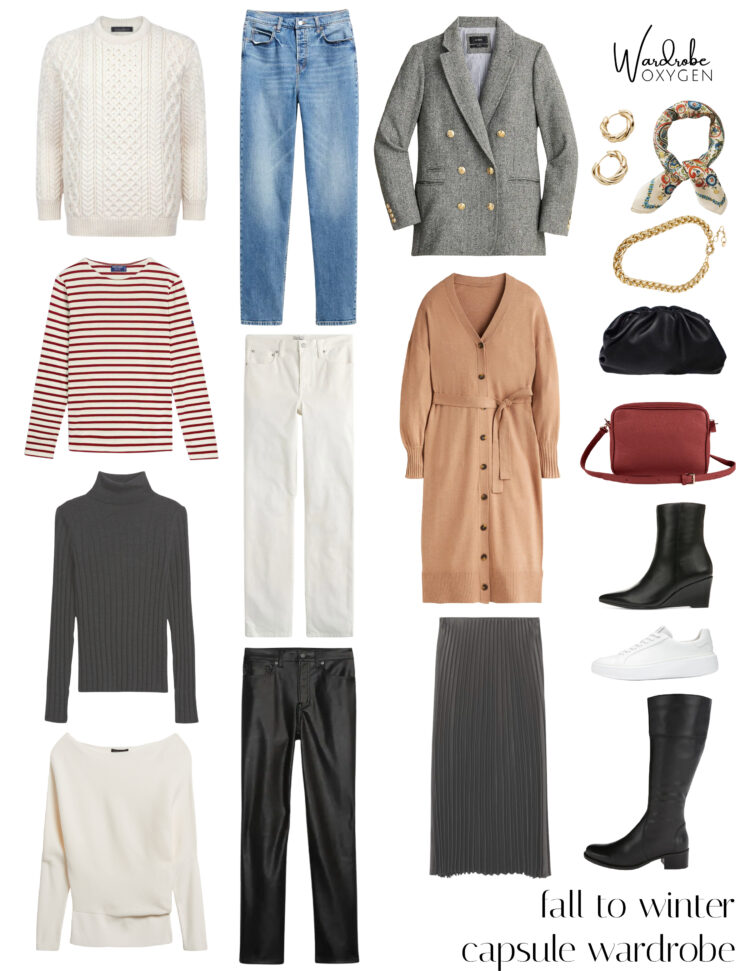
I have before written about the standards that are needed in every woman's wardrobe. This may vary based on climate, age and lifestyle, but is a pretty basic starter wardrobe for most women. Do you have pieces like this in your wardrobe? Basics you can fall back on at a moment's notice? Pieces like this are the types of things that style icons would have in their wardrobe. Classic pieces that go from casual to dressy, summer to winter, wedding to funeral.
3. After You Have Gotten Down and Dirty
Now that you have a base wardrobe, it's time to bring your personality into it.... slowly. Looking at the basics in your wardrobe, consider another sweater in a different neckline and color. A necklace that can really jazz up multiple outfits and makes you happy every time you see it. A pair of pants in another color - a neutral like gray, brown or camel. Or possibly something fun yet basic like a dark red, plum or a pinstripe. Your mantra at the mall is Quality, not Quantity. You don't need 30 sweaters that don't fit quite right, show your bra and are yucky colors. Instead, invest in three sweaters that fit great, look great, and are built to last. Though those three sweaters will cost more individually, it will be cheaper to buy those three, than keep replacing the cheaper ones as they pill, fade, stretch out, or get shoved to the bottom of the drawer for not being quite right.
4. What Am I Looking For?
You can find quality at a boutique, you can find quality at Target. It's all about looking for the signs of quality, style and durability.
Think "if Jackie O was on a budget, what would she purchase?" Keep this in your head as you scour the racks. Visualize your style icon, her trademark pieces, what she did to become a style icon and not a fashion victim.
Pills and Fuzz - do the pants have pills or fuzzies on them when on the hanger? Then leave them on the hanger. They will be a fuzz magnet, no matter how often you wash them or what fabric softeners you use. History has shown the pants and jackets that collect fuzz seem to fade the quickest as well.
Buttons and Zippers - Are the buttons the right size? This means, if you sit down, do they slide out of the button holes? Are they hard to button and unbutton? If you answer yes to either, put the piece back. This will look sloppy once worn out of the store, and will either make the button fall off or you get frustrated with the piece. As for zippers, slide it up and down many times. Think about how you will be wearing it - will you be handling that zipper with gloves and a bag of groceries in one hand, or will you be yanking it down several times a day int he restroom? Is it sewn in correctly so it won't get jammed, won't break, won't slide down with wear. Give it a test-run in the fitting room.
Pockets - You shouldn't be able to see the lining of pockets through your clothes, be it a suit jacket, skirt or pair of pants. If this is the case, leave it onthe rack. That is a sign of cheap fabric, poor construction and a bad cut. Pockets also shouldn't bow out. If you have curves below the waist, it's best to usually pass on slash pockets as that they will gape open, causing you too look wider than you are. Flap pockets on the bum are rarely flattering, get bent when sitting, and usually are an add-on cheaper brands use to make their clothes look more... gosh knows what, maybe fancier? I usually steer clear of flap pockets on the bum. As for faux pockets, mini pockets that can't hold anything larger than a quarter, or any other weird form of pocket that cheaper designers place on their clothing - STAY AWAY. These are signs of cheap manufacturing, quick trends that will die soon, and frustration (you'll constantly try to put your hand in that faux pocket, I just know it!).
Fabric - If you can't afford cashmere, that's okay. The only thing I won that is cashmere is a pashmina I got as a gift. However, because you can't afford it doesn't mean you can wear a poor knockoff. Silk/cashmere blends usually pill and thin. Pleather makes you sweat and doesn't stretch. Faux fur is far more PC, but any fur is overly trendy, overly controversial, and would not be part of a new millennium fashion icon's wardrobe. Your undergarments should not show through the clothing. This is never an attractive or stylish look. The fabric should not make you itch. If you push up sleeves, it shouldn't case the arm band to get permanently stretched out. Sit in the clothes, dance in the clothes. See how the fabric stretches with you, moves with you. Rub it against a different piece of clothing. Does the color transfer? Does have the decoration fall off? Does it shed on everything on on this planet? If so, leave it in the fitting room.
Cut - Are they perfect pants except.... Is the top exactly what you need if it only....? Almosts and Not Quites do not have room in any woman's wardrobe. These items either gets one wear (if that) and then retreat to the back of the closet, or get plenty of wear but look dreadful every time they don your body. The world will not end if you don't have a pair of black pants NOW NOW NOW. It's better to go without than to go halfway. Jackets should be able to button across your torso. Pants should be able to be sat in, legs crossed without straining. A belly button should never show through an article of clothing. Pant legs should be long enough to hide your ankle bones and be no more than an inch from the bottom of your heel. Long sleeves should cover your wrist bone. Shoulders should be appropriate, not an inch from your actual shoulder (oversized shoulders make you look heavier and shorter). Try sitting. How does the piece lie? Can the world see your bra? Your panties? When you stand, do you have weird creases at the crotch that won't disappear? Does it take two minutes just to put the outfit back in place? Do you need to buy a new bra, new camisole, new tummy cincher and a pair of silicone breasts to make the dress fit correctly? If you say yes (or yes but....) to any of these things, leave the article of clothing at the store.
Style - A sign of cheap clothing is over embellishments. I mentioned the use of flap pockets. Cheap clothing often tries to mask faulty manufacturing with brooches, bedazzling, contrast stitching, applique and other adornments. These adornments may be fun and quirky, but I suggest you stick to simpler pieces that will go from year to year, and get your fun and funky adornments through accessories that can be retired when the trend passes. Overly embellished garments make impact - these are pieces that can only be worn a few times a season or people will soon be saying "...look she's wearing that pink sweater with the leopard collar and cuffs AGAIN." Having pieces that are that limiting in your wardrobe are not what you need - they will be a waste of money if you are on a budget.
Color - This season it's purple, next season it may be green. Whatever the fashion magazines dictate, buy what you enjoy. Neutrals aren't always the best choice. Neutrals fade into the background and you lose your personality. Pick colors that make you happy, make you feel powerful, make you feel beautiful. Black can be versatile, and khaki doesn't show stains, but you will feel better about yourself and present a better image to others if you wear color. Look for saturated fabrics, ones that will hold their color after washings. The thread in the stitching should perfectly match the fabric. Again, rub it against another garment, check for color transfer (this often happens under the arms when the fabric gets warm and humid). Consider the color, will it compliment the rest of your wardrobe, or will you have to buy eight more articles of clothing to match it? Only buy clothing that brings you happiness. You wouldn't hang artwork in your home that made you feel depressed, why decorate your body with depressing art?
Accessories - These don't have to be made of platinum, gold and emeralds, but should be able to withstand multiple wearings, a bang against a table or a kid playing with it. I have found great accessories at Target, at Claire's Boutique, at discount stores like TJ Maxx, Burlington Coat Factory and Marhshall's.
These should be pieces that compliment an outfit, not compete with it. Signature pieces, like Jackie O's pillbox hat, Grace Kelly's scarf, Coco Chanel's red lipstick. Pieces that help make you... well you! For me it's a bold silver cuff that is my signature piece. I compliment it and my wardrobe with Silver hoops, chunky silver rings. Artsy pieces that I feel help reflect my creative side. I have mentioned before what accessories belong in every woman's wardrobe. Now you need to think quality, taste, elegance, style.
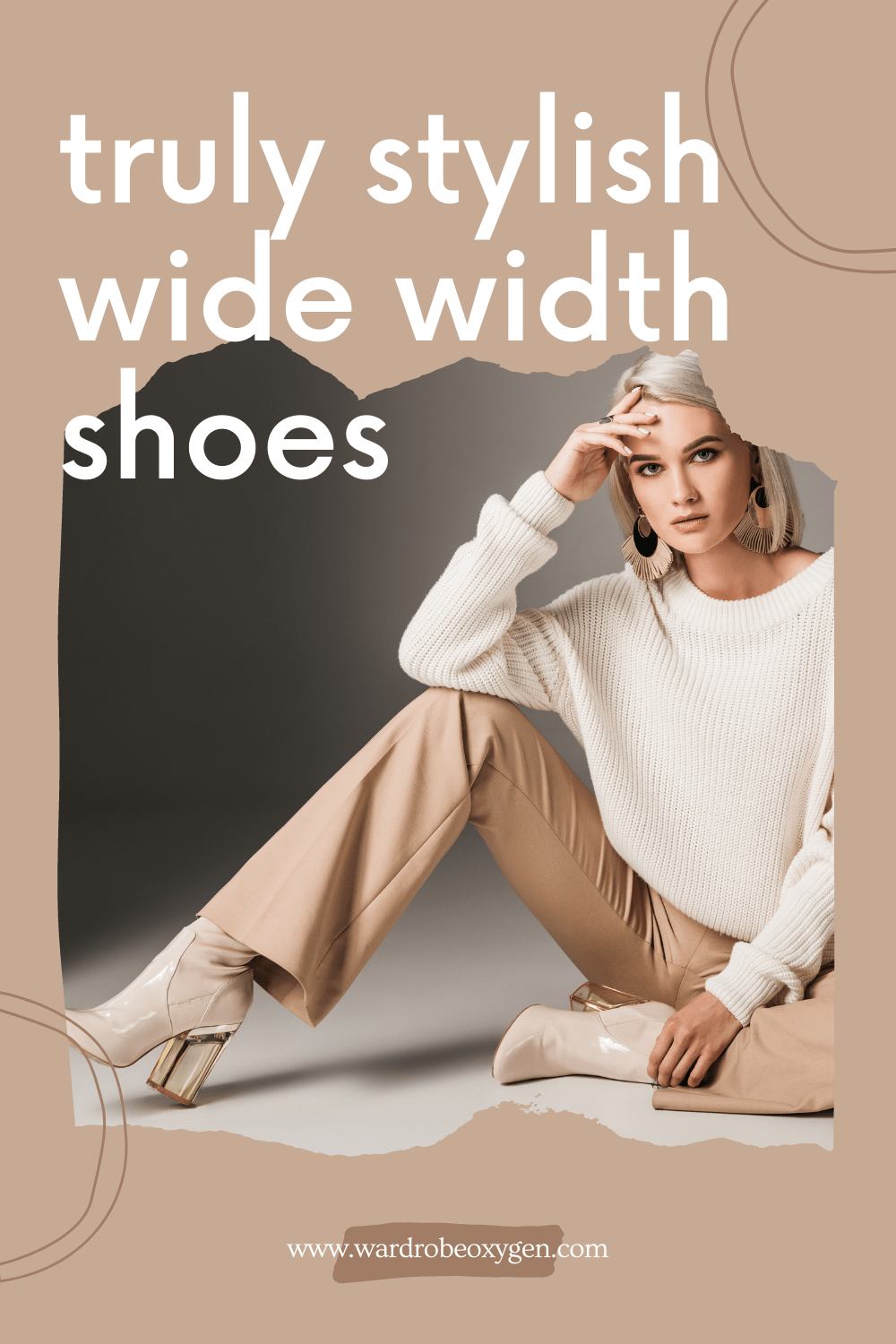
Shoes should be comfortable. They should have classic lines. Leather lasts longer than pleather, can be shined up to look beautiful again, stretches to mold your feet perfectly, and is more versatile. Heels should be wide enough at the base of the shoe to properly support your foot and not cause pain. Toe cleavage (when you can see the spaces between your toes out of the top of a pump or shoe) is an extreme no-no. It is cheaper to buy a pair of quality pumps and get them resoled and reheeled each year than to buy a new cheaper pair each year. Invest in shoe shine tools - you can find them at your grocery store. One hour, every few months will give years to your footwear. Invest in classic pieces. Hot pink suede booties may be adorable, but will you still adore them and wear them weekly after three months? If in doubt, purchase black leather or brown croco. Both fabrics and colors will wear nicely over the years. My mother still wear a pair of black ankle boots she purchased in 1968. The soles have been replaced, the heels reheeled. New inserts have been purchased but the leather is still supple and rich and she is still complimented when she wears them. That is quite an investment, and a fabulous example of how quality can save you money.
When you go shopping, take pictures for assistance. Tear out pages from magazines. Take a headshot of your fashion icon. Take a photograph of you in an outfit you regret as motivation. Make a list of what you believe you need, and don't let a salesperson or friend tell you otherwise. Consider purchases of clothing as you would consider a purchase of an appliance or a car. Do your homework, don't buy the first pair of black pants you see. Take them for a test drive in the fitting room or around the store. Do price comparison, fabric comparison, and don't settle. You deserve the best, and you can find it, no matter what your budget may be.

0 comments:
Post a Comment
I thank you for taking time to comment on my blog!